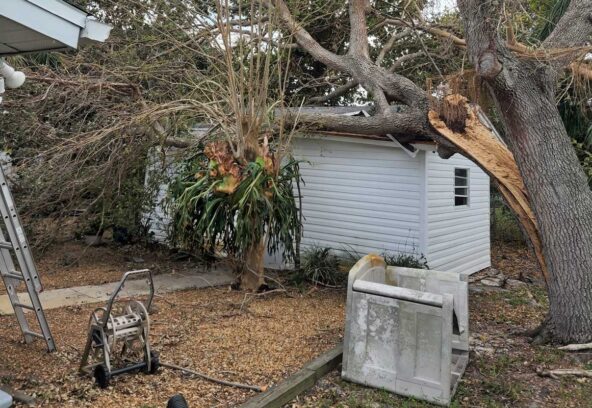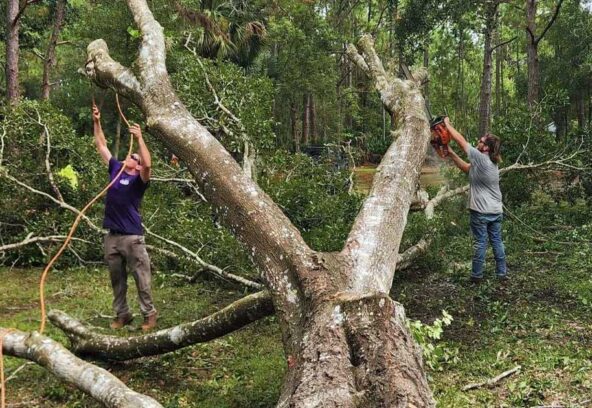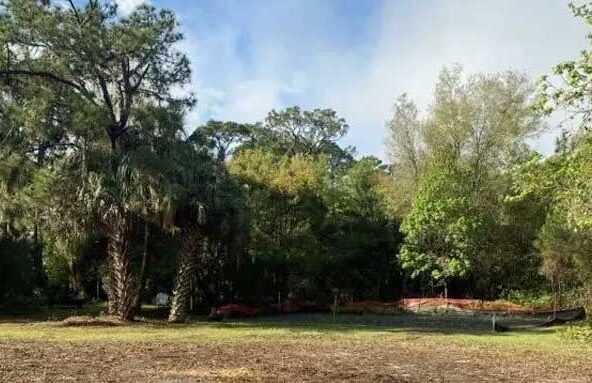

The morning after a storm in Central Florida can leave your yard looking like a different place entirely. Scattered debris, fallen limbs, displaced landscaping, and damaged trees create a cleanup challenge that can feel overwhelming when viewed all at once. Approaching the work in a logical sequence, knowing what you can safely handle yourself, and knowing when to call a professional makes the process considerably more manageable.
Step One: Survey Before You Touch Anything
Before moving a single branch or stepping into any part of your yard, do a complete visual survey from a safe vantage point. You are looking for conditions that make the yard unsafe to enter: downed power lines, hanging limbs that could fall, uprooted trees that are partially supported and could shift, and any standing water in areas where utility lines or underground systems may have been damaged.
Do not enter any area of the yard that you cannot confirm is safe. Take photographs during this survey phase to document conditions before cleanup begins.
Step Two: Report Utility Hazards Immediately
If you see any downed power lines, or any lines that appear to be in contact with trees, fencing, or other objects, call your utility provider immediately. Do not attempt to move lines, cut trees in contact with lines, or work anywhere near lines that may be energized.
This step cannot be skipped or deferred. Energized lines in contact with water, fencing, or other conductors can be lethal at distances that are not immediately apparent.
Step Three: Handle Small, Safe Debris Yourself
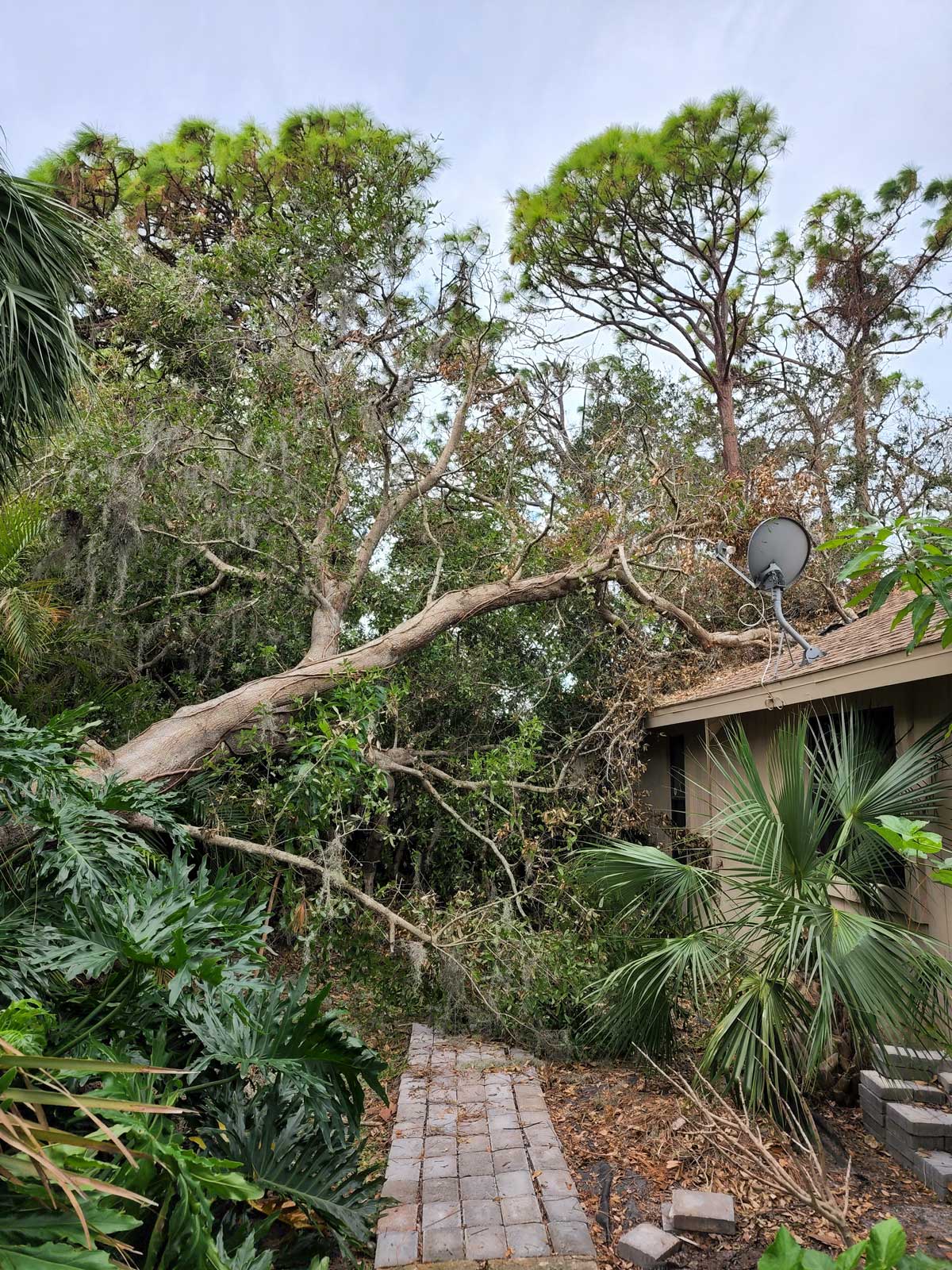
Once you have confirmed the yard is safe to enter, you can begin handling small debris that poses no safety risk. Small branches, leaf debris, displaced mulch, overturned planters, and similar lightweight material can generally be handled by homeowners without special equipment.
Rake and pile debris in a staging area, keeping it away from storm drains and roadways. Check with your county or municipality about curbside debris pickup programs that may be activated following a declared storm event.
Step Four: Leave Large Limbs and Downed Trees to Professionals
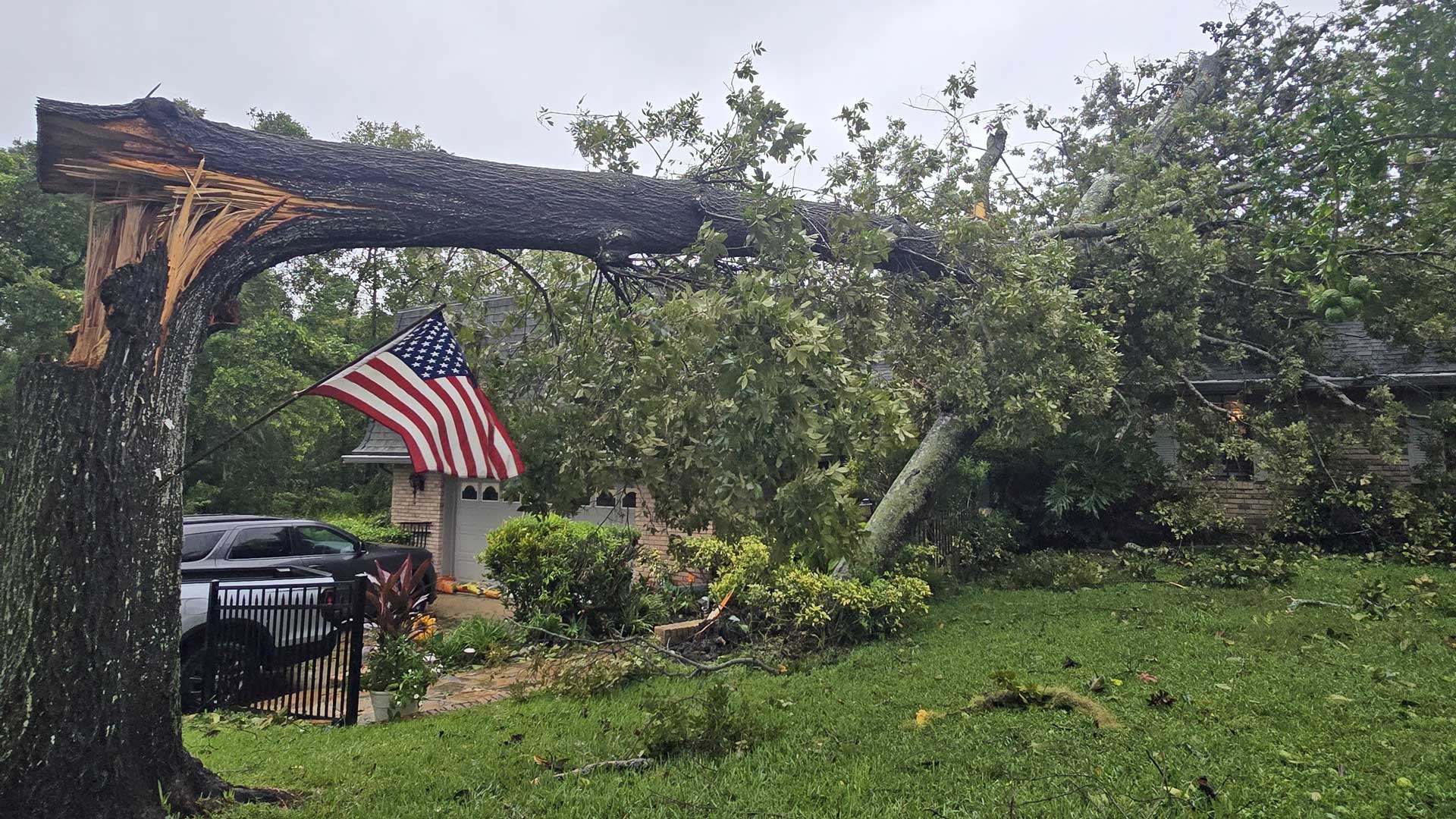
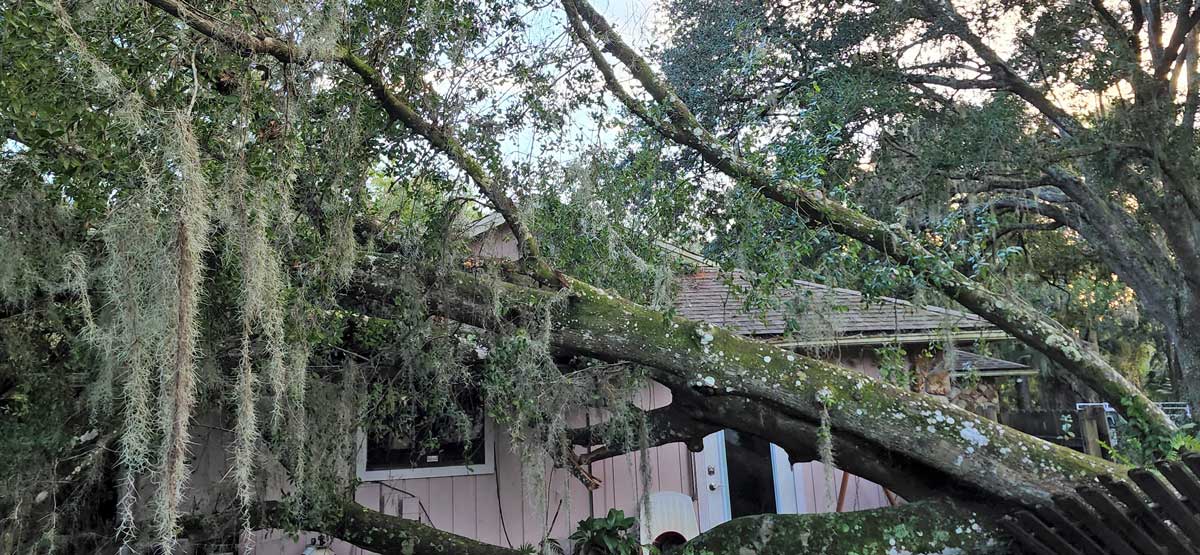
Any limb or section of a tree that is large enough to cause injury, or any work that requires a chainsaw, should be left to a professional tree service. This includes limbs that are still attached but hanging, large sections of fallen trees, and any tree material that is in contact with your home, fencing, or other structures.
Attempting to cut large fallen trees without professional training is dangerous. The tension and weight distribution in a fallen tree are not intuitive, and even experienced homeowners can be seriously injured attempting cuts that a professional would approach differently.
Step Five: Assess Your Trees for Post-Storm Damage
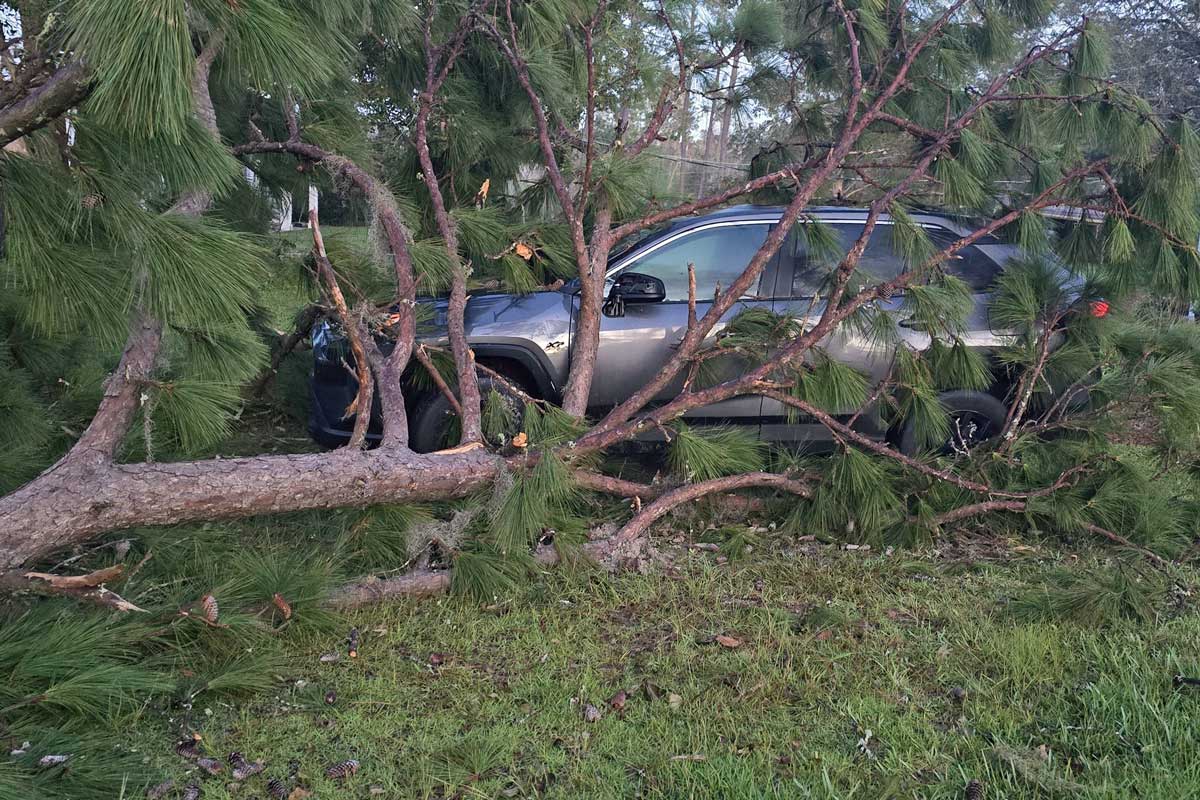
After the debris is cleared, take time to walk around each significant tree on your property and look for post-storm damage that may not be immediately obvious. Look for new cracks in the trunk or major limbs, bark that has been stripped or torn, limbs that are still attached but visibly broken partway through, root systems that have lifted or shifted, and any lean that appears to have changed.
Trees that survived the storm but show signs of structural damage may be more vulnerable in future storms. A post-storm tree assessment from a professional can help identify which trees need trimming, cabling, or removal before the next storm event.
Step Six: Document Everything for Insurance
Keep a photographic record of the full cleanup process, particularly any structural damage to your home, fencing, outbuildings, or vehicles. If a professional tree service performs removal or debris cleanup on your property, ask for written documentation of the work, including a description of the conditions they found. This documentation is important for any insurance claims related to the storm event and should be preserved carefully.
Frequently Asked Questions
What debris can I put out for curbside pickup after a storm in Florida?
Most counties in Central Florida activate storm debris collection programs following declared storm events. These programs typically cover yard waste debris such as tree limbs, branches, and organic material. Debris should generally be separated from household waste and staged at the roadside without blocking storm drains. Check with your specific county or municipality for current pickup guidelines and estimated collection dates in your area following a storm event.
How do I know if a fallen limb is safe to move myself?
A limb is generally safe to move yourself if it is small enough to carry or drag by hand without strain, if it is not in contact with power lines or structures, and if moving it does not require a chainsaw. If a limb requires cutting, is larger than you can safely lift, or is resting against or in contact with anything other than the ground, it should be handled by a professional tree service. When in doubt, leave it and call a professional.
How soon after a storm should I have my trees professionally assessed in Central Florida?
Most counties in Central Florida activate storm debris collection programs following declared storm events. These programs typically cover yard waste debris such as tree limbs, branches, and organic material. Debris should generally be separated from household waste and staged at the roadside without blocking storm drains. Check with your specific county or municipality for current pickup guidelines and estimated collection dates in your area following a storm event.
A limb is generally safe to move yourself if it is small enough to carry or drag by hand without strain, if it is not in contact with power lines or structures, and if moving it does not require a chainsaw. If a limb requires cutting, is larger than you can safely lift, or is resting against or in contact with anything other than the ground, it should be handled by a professional tree service. When in doubt, leave it and call a professional.
Ideally, within a few days of the storm passing and conditions being safe enough for a crew to work on your property. Post-storm tree assessments are most valuable when completed while conditions are still fresh and before any secondary weather events arrive. Identifying storm-weakened trees quickly also gives you the most lead time to address them before they become more serious hazards.
If you’ve got a tree you’re worried about—or one you’ve been putting off dealing with—give us a call at (321) 376-3781 or request a free estimate through our website. We’ll come out, take a look, and give you a straight answer. No pressure, no upselling, just honest assessment from people who actually care about trees.
Because the best time to make this decision is before a storm makes it for you.
— The Homegrown Outdoors Team
Central Florida’s Tree Care Professionals