
Your Trees Have Been Waiting for January: Why This Is the Best Month for Major Tree Work in Florida

Your Trees Have Been Waiting for January: Why This Is the Best Month for Major Tree Work in Florida

Jan 15, 2026
12

There’s a running joke among arborists in Central Florida: while the rest of the country is buried under snow and dreaming of spring, we’re out here in short sleeves doing some of our best work of the year. January might not feel like much of a “winter” to folks who moved down from up North, but for your trees? This is their quiet season. And for us at Homegrown Outdoors, it’s prime time.

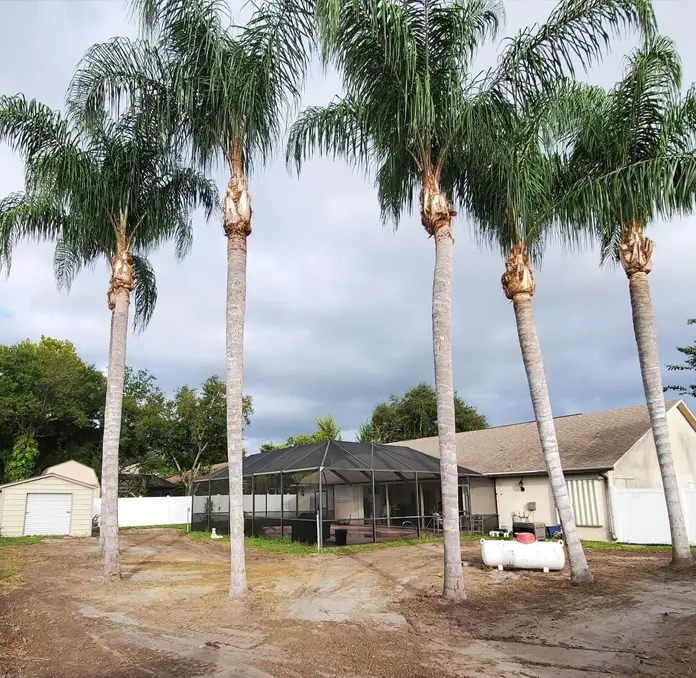
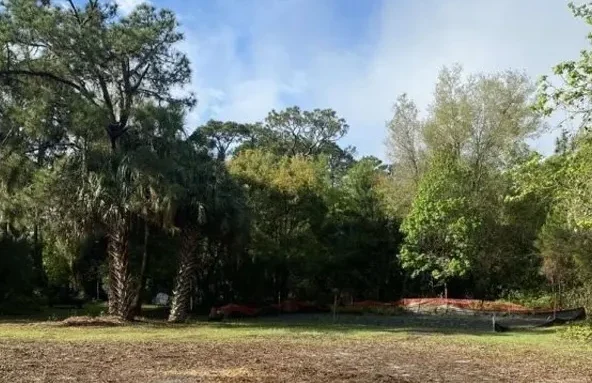
Four tall palm trees in a cleared Florida yard after professional tree care services provided by HomeGrownOutdoors.

If you’ve been putting off that tree work—maybe there’s a Live Oak that’s gotten a little too friendly with your roof, or a Laurel Oak that’s looking more scraggly than stately—January is the month to finally check it off the list. Not because we’re trying to fill our schedule (though we appreciate the work), but because your trees are literally built to handle pruning right now.

Let me explain why.

What "Dormant" Actually Means Down Here

Now, I know what you’re thinking. Dormant? In Florida? Our trees don’t exactly drop all their leaves and go to sleep like a maple in Michigan.

You’re right—most of our native and common landscape trees are evergreen or semi-evergreen. But dormancy isn’t just about losing leaves. It’s about the tree slowing down its internal processes: less active growth, less sap flow, less energy being pushed out to the branch tips. Even our Live Oaks, which stay green year-round, go through this slowdown when temperatures dip into the 40s and 50s at night.

January is typically our coldest month here on the Space Coast. We might not see snow (thank goodness), but those cooler nights signal to your trees that it’s time to rest. And a resting tree is a tree that handles pruning stress far better than one that’s actively pushing out new growth in the heat of July.

Dr. Ed Gilman, the legendary tree researcher out of UF/IFAS, spent decades studying how trees respond to pruning. His work—which guides everything we do at Homegrown Outdoors—shows that trees pruned during dormancy compartmentalize wounds more efficiently. In plain English: the cuts heal faster and cleaner, with less risk of decay setting in.

You Can Actually See What's Going On

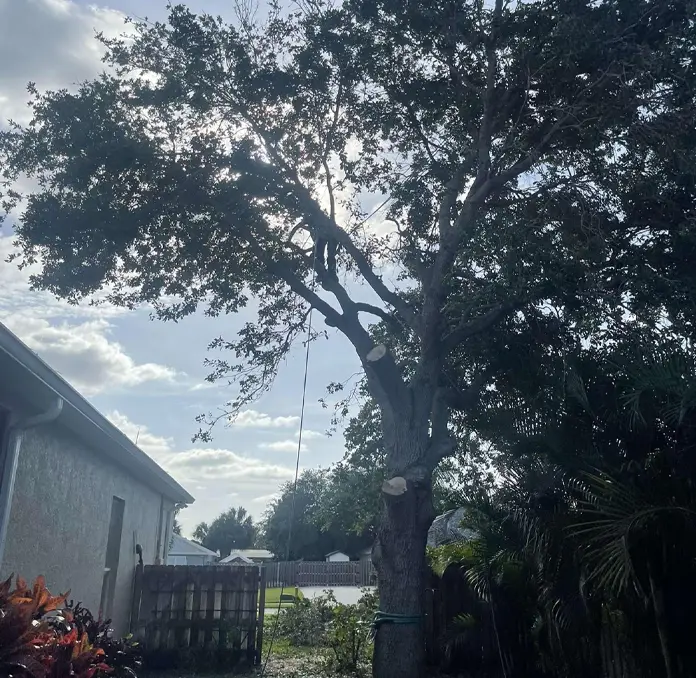
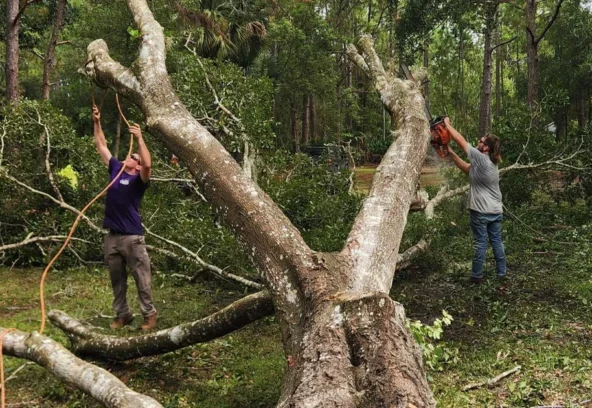
Professional arborist cutting tree limbs during the Florida winter for expert tree care services by HomeGrownOutdoors.

Here’s something a lot of homeowners don’t think about: even our “evergreen” trees thin out a bit during winter. That Laurel Oak in your backyard might keep its leaves, but the canopy opens up enough that we can finally see the branch structure underneath.

And that matters. A lot.

When we’re up in a tree during summer, we’re working blind in some ways. The foliage is so thick that problem branches—the ones that are crossing and rubbing, the deadwood hiding in the interior, the co-dominant stems that could split in a storm—are harder to spot. Come January, those issues are right there in front of us.

Our ISA Certified Arborist can walk your property in January and give you a much more accurate assessment than he could in August. We can see the cracks, the weak unions, the branches that are growing toward your house instead of away from it. It’s like the difference between trying to diagnose a car problem with the hood closed versus popped open.

Pests and Disease Are Taking a Break Too

Every time you make a pruning cut, you’re creating an entry point. That’s just the reality of tree work. The goal is to make clean cuts that the tree can seal over quickly—and to do it when the bad actors aren’t around to take advantage.

In summer, our trees are under siege. Fungal spores are floating everywhere in the humid air. Boring insects are active and looking for stressed trees to colonize. Bacterial infections spread rapidly in the heat.

January? Most of that activity grinds to a halt. The fungal pressure drops dramatically. Insect populations are at their lowest point of the year. When we prune your trees now, those fresh cuts have time to begin healing before the pest and disease pressure ramps back up in spring.

This is especially important for oak trees, which can be susceptible to oak wilt and other fungal issues. The old-timers used to say “prune oaks when there’s an R in the month”—and while that’s a bit of an oversimplification, the principle is sound. Winter pruning reduces risk.

Better Availability, Better Pricing

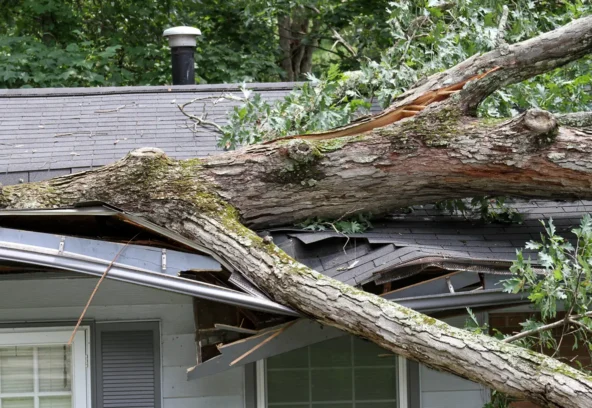
I’ll be honest with you: tree service companies in Florida live and die by hurricane season. From June through November, our phones ring off the hook with emergency calls. Trees through roofs, trees across driveways, trees tangled in power lines. It’s chaos, and as much as we’re here to help when disaster strikes, there’s only so much of us to go around.

January is different. The storms have passed. The emergency calls have slowed down. Our crews have room to breathe, which means we have room in our schedule for the kind of careful, thoughtful tree work that non-emergency jobs deserve.

That also tends to mean better pricing. When we’re not scrambling between storm damage calls, we can be more competitive on routine pruning and removals. If you’ve been sitting on a quote from last year, now’s the time to revisit it.

What Should You Be Looking At?

Take a walk around your property this week. Really look at your trees. Here’s what to watch for:


We Do Things a Little Differently

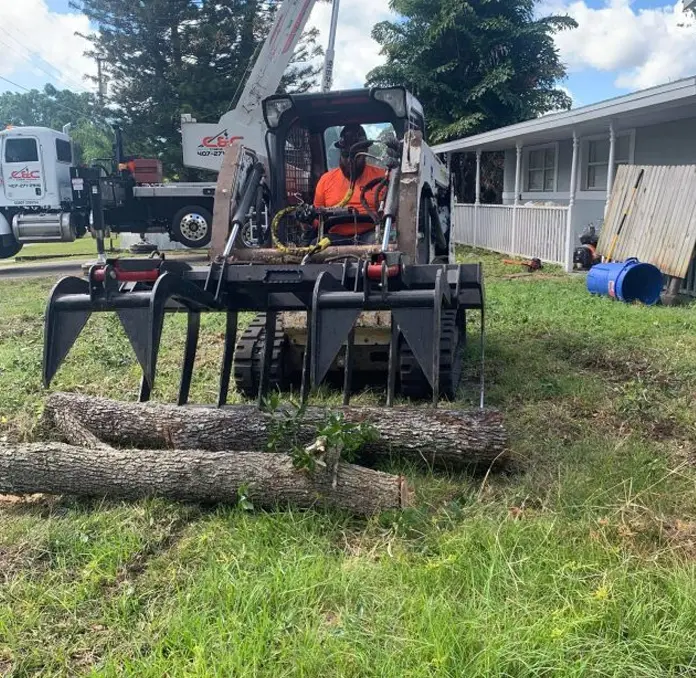
HomeGrownOutdoors worker using a grapple machine to clear heavy logs, providing professional tree care services in Florida.

When you call Homegrown Outdoors, you’re getting a family company—my dad Richard and I have been doing this together for eight years now. We’re not some franchise outfit with a call center three states away. We’re your neighbors. We’re the purple trailer guys you see around Titusville and Melbourne and Palm Bay.

We also do things by the book. ISA standards. ANSI A300 pruning specifications. Dr. Gilman’s research-backed techniques. And we climb without spikes on trees we’re pruning—because driving metal spikes into a trunk creates wounds we’re supposedly there to prevent. It takes more skill to climb spikeless, but it’s the right way to do it.

Your trees are a long-term investment. They add value to your property, shade your home, and if you’ve lived here long enough, they’re probably part of why you fell in love with your place to begin with. They deserve care that’s actually good for them, not just fast.

Let's Talk About Your Trees

If you’ve been meaning to get that tree work done, January is your month. Give us a call at 321-987-1258 or request a free estimate through our website. We’ll come out, take a look, and give you honest recommendations—no pressure, no upselling services you don’t need.

Your trees have been waiting all year for this. Let’s make 2026 the year you finally take care of them.

The Homegrown Outdoors Team
Central Florida’s Tree Care Professionals

Make A Comment

About Home Grown Outdoors

Homegrown Outdoors logo featuring an a vintage off-road vehicle on a purple background

Our commitment goes beyond just cutting trees. We follow strict International Society of Arboriculture standards, use spikeless climbing to protect tree health, and create long-term maintenance plans that save you money. When hurricanes strike, we’re among the first to respond, handling insurance claims directly so you can focus on recovery.

Recent Posts

Categories

Cart (0 items)